
AI Code
January 20, 2026

.png)
Pull requests slow teams down when clarity, testing, and cleanup are left to the review stage. Teams achieve faster reviews and better code quality when intent is clear, tests are included, and changes are review-ready before a pull request is opened. Shifting this work earlier turns pull requests from correction-heavy bottlenecks into simple confirmation steps.
Pull requests sit at a critical intersection of quality and velocity. In theory, they help teams catch issues, align on design decisions, and maintain standards. In practice, especially in larger or distributed teams, pull requests often become a source of delay.
As teams scale, common patterns emerge. Pull requests grow larger as changes are batched to save time. Reviewers struggle to understand intent because context lives in tickets or conversations they were not part of. Tests are missing or added only after feedback. Review comments focus on style, structure, or cleanup rather than design or correctness.
A good pull request is rarely defined by how fast it is merged. Instead, it usually has a few consistent qualities:
The issue is not that teams do not know what a good pull request looks like. The problem is that the work required to create one is often pushed too late, into the review itself.
Pull request reviews slow down when reviewers are asked to do work that should have happened earlier. This includes understanding unfamiliar code, inferring intent from implementation details, or requesting missing tests and documentation.
When clarity, testing, and cleanup are addressed during development rather than during review, the nature of the review changes. Reviewers move from correcting issues to confirming decisions. Conversations become shorter and more focused. Merge cycles shrink without lowering standards.
This is where CodeSpell helps developers. When developers can understand code faster, document changes as they go, and add tests before opening a pull request, review cycles become lighter and more predictable. This reduces friction without changing the review process itself.
CodeSpell supports better pull requests by helping developers do more of the review work while they are still writing code.
Inside the IDE, CodeSpell assists with:
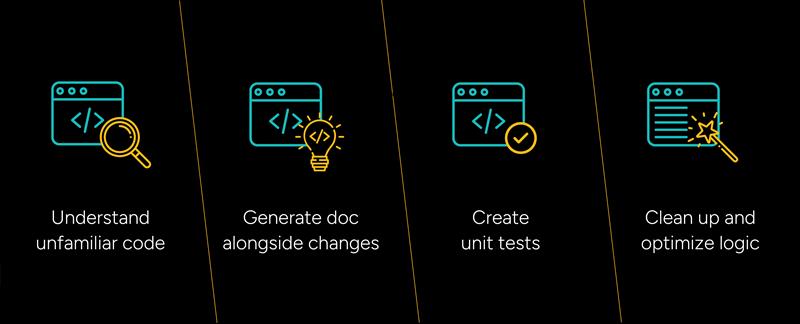
Because this happens before a pull request is opened, changes arrive in a more review-ready state. Reviewers spend less time asking for clarification or requesting basic improvements. Developers retain control over all changes, reviewing and applying suggestions rather than accepting opaque output.
CodeSpell does not replace reviews or reviewers. It helps ensure that pull requests enter the review process with clearer intent, better test coverage, and fewer avoidable issues.
When pull requests consistently include tests, documentation, and cleaner code, teams see compounding benefits.
Review cycles become shorter because fewer fundamentals need to be addressed. Code quality becomes more consistent across contributors, not just those with deep system knowledge. Issues surface earlier, when they are easier to fix, rather than after merge.
Over time, this shifts the role of code reviews. Instead of serving as a catchall safety net, reviews become a focused checkpoint for design decisions and correctness. Quality improves not because reviews become stricter, but because less corrective work is required during review.
In many teams, high-quality pull requests depend on individual discipline or senior reviewers catching issues before merge. This approach does not scale well.
Teams scale more effectively when pull request quality is supported by the system around developers, not enforced through constant oversight. When clarity, testing, and cleanup are built into the development workflow, good pull requests become the default rather than the exception.
CodeSpell contributes to this shift by embedding support directly where code is written, helping teams reduce friction earlier and making review cycles more predictable. Pull requests stop being a bottleneck and start functioning as they were intended, as a lightweight, reliable quality gate.
The result is not just faster merges, but more sustainable delivery.


Don’t Miss Out
We share cool stuff about coding, AI, and making dev life easier.
Hop on the list - we’ll keep it chill.
© 2026, CodeSpell.ai. All Rights Reserved