


.png)
Figma to code
January 29, 2026

.png)
AI has increased output across the SDLC, but many enterprises are paying a hidden cost fixing, reviewing, and aligning AI-generated work. This “workslop” doesn’t disappear it moves downstream. Reducing it requires grounding AI assistance in context and governance early in the SDLC. CodeSpell helps by aligning intent, execution, and validation inside the developer workflow.
It’s tempting to attribute workslop to immature models or poor prompts. In practice, the root cause is usually missing context.
Most AI tools operate close to the code surface. They respond to a file, a function, or a prompt without understanding the broader picture engineers naturally rely on, the requirement driving the change, architectural conventions, dependencies across the workspace, or what validation should demonstrate correctness.
Without this context, AI optimizes locally while creating global misalignment. Humans then absorb the cost by restoring intent during reviews and testing.
This is where CodeSpell becomes relevant. By working inside the IDE and using file- and workspace-level context, CodeSpell helps developers understand existing code, add documentation and tests, and make changes with clearer alignment to requirements reducing the amount of rework that happens later in reviews and QA.
In small teams, misalignment can often be resolved informally. In large enterprises, it becomes a governance issue.
Shared codebases, distributed ownership, and formal approval processes amplify every ambiguity. AI-generated work that lacks alignment increases exception handling, escalations, and dependency on senior reviewers. Instead of reducing coordination, AI can unintentionally increase it.
This is where CodeSpell matters beyond individual productivity. Enterprises don’t just need faster code generation they need AI assistance that respects how engineering governance works in practice. By supporting rules, workspace context, and consistent patterns inside the IDE, CodeSpell helps reduce the number of issues that reach formal review stages in the first place.
The goal isn’t to bypass governance. It’s to reduce the load it carries.
The most effective way to reduce AI workslop isn’t adding more checkpoints or stricter reviews. It’s preventing misalignment before it happens.
That means bringing context earlier and keeping it connected through execution:
CodeSpell supports this shift by keeping intent, code, and validation closer together. ReqSpell helps structure and query requirements so developers aren’t guessing at intent. In-IDE spells like /explain and /doc reduce ambiguity while changes are being made. /unit-test supports adding unit coverage during development, and TestSpell helps translate requirements and stories into test cases rather than treating testing as a separate, downstream activity.
This doesn’t remove human judgment. It reduces the amount of avoidable interpretation that leads to workslop later.
CodeSpell reduces AI workslop by aligning assistance with the same signals engineers use to judge quality: intent, context, and validation.
It helps directly by:
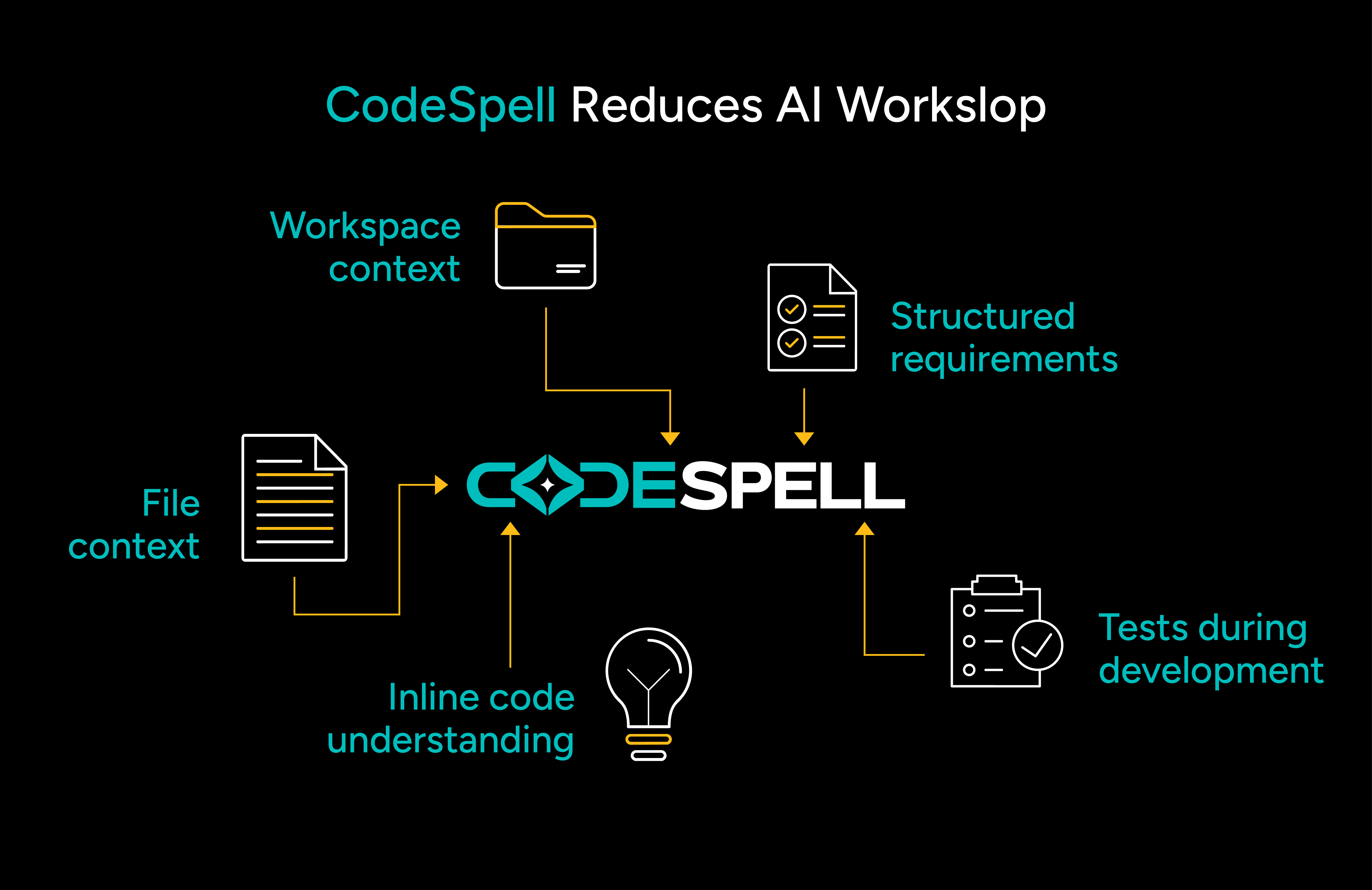
Beyond direct reduction of workslop, CodeSpell also helps by improving pull-request readiness, reducing reliance on tribal knowledge, and strengthening quality habits without forcing teams into new workflows or tools.
Developers stay in control. AI stays contextual. Downstream correction costs go down.
The future of AI in the SDLC is not about producing more artifacts faster. It’s about aligning intent, execution, and validation so teams spend less time fixing work and more time delivering value.
When context is embedded into the developer workflow, AI stops being a source of downstream friction and becomes a contributor to clarity. That is where platforms like Codespell create real, sustainable value for enterprise engineering teams.


Don’t Miss Out
We share cool stuff about coding, AI, and making dev life easier.
Hop on the list - we’ll keep it chill.
© 2026, CodeSpell.ai. All Rights Reserved
.png)


